
Summer memories
My grandfather taught me the art of hospitality. When August arrives, with its heat and afternoon storms, I think of him and his annual party.

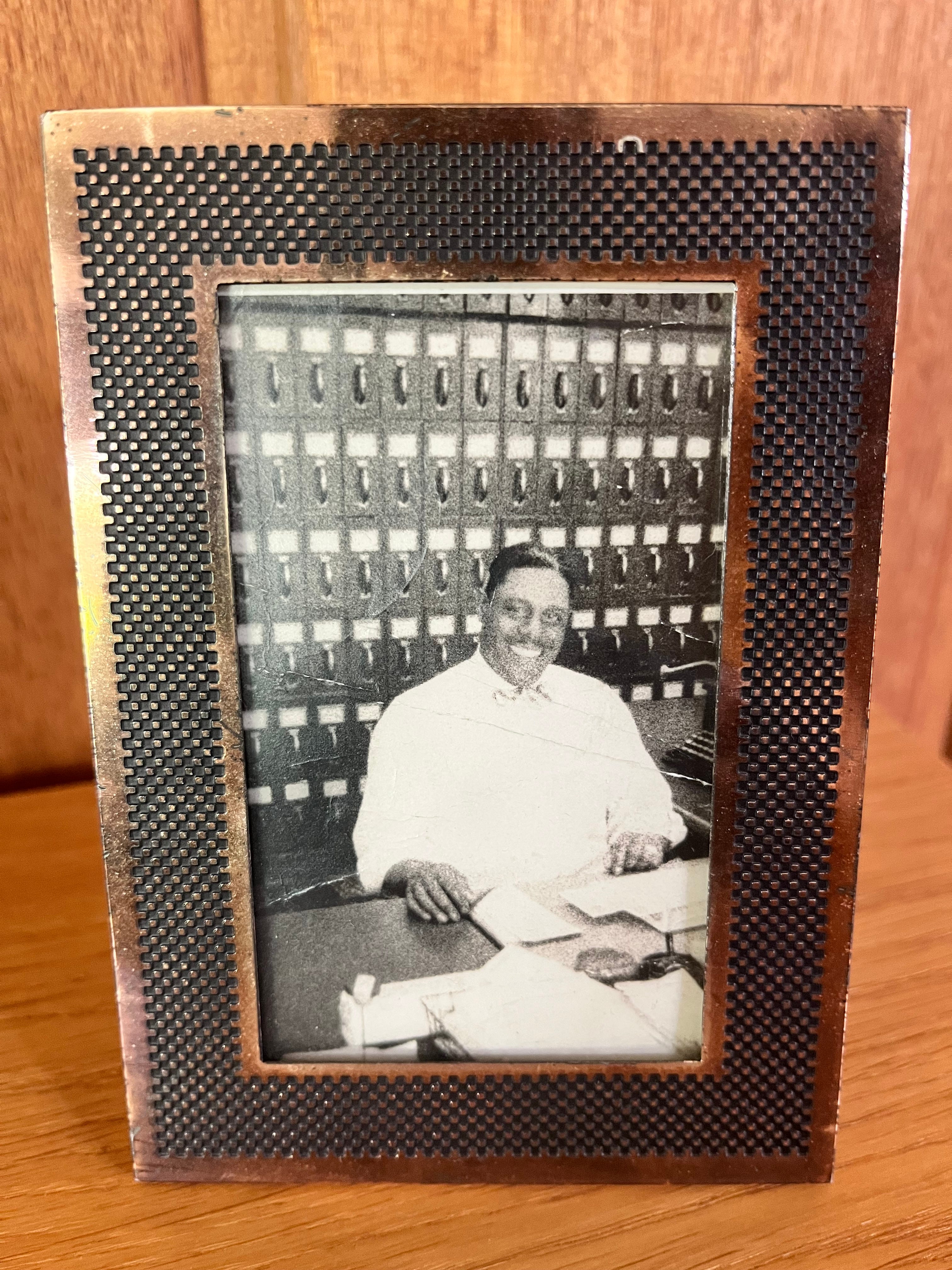
My paternal grandfather had a summer party at his home up until the last couple of years before he died. It was called the old-timers party, but this is a name that came about over time. I was not that aware of the party until my teens, but I always knew my grandfather was a good host. During visits to his home, before I could get settled on his couch, he would offer, “You want some peanuts?” or “Get some candy from the dish.” I would reach for the peanuts, always fresh, tasting the salty outside before crunching them in my mouth, a few at a time. His cocktail table had a dish of hard candies ready for guests, something my parents did not do, and going to see him was a treat.
My father told me the parties began when his parents were a young couple, years before my grandmother passed away, which happened when I was six months old. The first parties were at the house on Eden Avenue, which was an appropriate, if idyllic, name for the backyard setting of his celebrations. My grandfather’s second and last house was on Vine, a miles-long street that trails its way all the way through Cincinnati, from downtown near the Ohio River to the suburbs in the north.
In my twenties I began to lend a hand if I was around, joining my father, an uncle, and my brothers to help my grandfather with the setup for the festivities. I appreciated the effort he made to transform his backyard into an outdoor club—he paid attention to detail to make sure every need could be met in a comfortable and intimate atmosphere. I learned about hospitality and entertaining, which are not the same thing, by watching his preparations over the years. It took planning, but he had thrown this party for so long it was easy because many of the steps never changed.
His basement held all the items that were needed—furniture, decorations, serving utensils, cups—all of it was stored downstairs. I never had to search through piles of dusty rubble because my grandfather had a storage system rivaling that of a library. Everything in a box was wrapped with twine or folded up. He labeled each box, which might have contained canned goods or bottles in its prior life, in large capital letters in his neat handwriting, making it easy to find.
“Bring me those cups,” he said, “over there, to your left.” I turned and the box was right where he said it would be, its contents waiting to assume their place at the party. My grandfather never owned a car, so until my first time at his party I had no reason to enter the garage. I walked over to the door, expecting clutter or maybe banged-up garbage cans. It was like walking into an event planner’s stash of entertaining essentials—dozens of chairs, tables, special plates and dishes, lanterns, aluminum tumblers of every size and color and everything was arranged in neat stacks. Wow, I thought, he has everything you’d ever want for a party.
Custom-painted metal coolers that were nearly the size of a small bathtub were brought up from the basement and placed outside. The coolers had formerly been in service in pony keg stores or event halls, but he took the time to decorate them according to his personal style. He painted one cooler yellow, with black silhouettes of jazz singers and saxophone musicians as decoration. He had written his name, Norman, on the side, along with the name of his girlfriend, Roberta.
My brother moved the stereo to the back porch, the LPs neatly arranged nearby. Jazz was the music of choice, the only music that would be played during the evening. Maybe some big band music might be added to the mix, but jazz was the sound he most loved.
In the backyard there were at least 12 tables, each with four chairs to match. Even if he had three red tables, he knew exactly which one of the 12 red chairs went with a particular table. It was a kaleidoscopic scene, with pastel pinks and mint greens mixed in with reds and yellows. The table sets were the type found in ice cream parlors, with ornately curled backs on the chairs and curved legs on the bottom.
My grandfather was precise in his instructions about the arrangements of furniture. “No, put that chair over here,” he might say, swinging his hand in the direction it should be placed. Or “Wait a minute, where is the table that goes with that set?” He had design in mind long before home and garden design shows became popular, and he was deliberate about every detail.
“Space out the colors over there, you don’t want to have all the yellows together.”
We smiled, knowing he was not scolding us, he just had firm ideas about how this was going to look. Every now and then a cousin or brother might roll his eyes, wondering what difference it made, and someone would say, “That’s your grandfather, you know how he is,” but in the end, my grandfather was right. A quick change was made and a chair was moved to a better spot.
“That’s better son, don’t you think that looks better?” he asked of anyone around, whether it was my father, an uncle or one of his grandchildren. As a girl, I was not expected to do any heavy lifting but I helped move lighter items and set the tables.
He looked over at me and said, “Baby, does it look good?
Smiling back, I responded, “Yes, Granddaddy, it’s pretty.” No matter how old I was, I was still “baby.”
Once the tables were in position, he pulled out his boxes with the tabletop items, domed mesh food covers, salt and pepper sets, toothpick holders, and ashtrays for the smokers. He came from the era of cigarette girls and big bands and it felt like a nightclub in the backyard, or maybe a beer garden, with ashtrays and matchbooks for the smokers. His nickname among his friends was “Duke” because he was known for his classic suits and attention to his appearance. I learned that small details were important. Even in the backyard, elegance mattered.
Lights hung on poles and trees around the perimeter of the yard, and at night it looked like a festival. Speakers stood sentry on poles so you could hear the music whether you were closer to the porch, or at the back part of the yard where it sloped up a small hill. He took care of every item he owned, and there would have been no need to purchase something new because he already had items that were in good shape.
There were pots of flowers to greet guests when they arrived at the front door and more flowers in the yard. The yardwork would not take any special effort, he always had something growing and he took pride in his landscaping. He taught me the names of flowers, such as petunias and geraniums, the two types always in concrete planters on the front steps. I remember when I was in first grade and he still lived on Eden. On my way to school I could see his backyard if I looked up a hill to his street, one block over. I treasured those mornings when I caught a glimpse of him working in his yard. Sometimes he saw me first and called out, “Ramona, hello, good morning.”
“Hi Granddaddy,” I said, stopping to wave and smile. If a friend was with me on my walk I would point out my grandfather, beaming with delight. How many of my friends got to see their grandfather on the way to school?
“Work hard in school, I’ll let you go on so you won’t be late.” He’d wave back and I would continue on my way.
With everything in place, the only thing left to do was getting cleaned up and dressed for the arrival of his guests. My grandfather switched out of his work clothes, the ones he wore to do chores around the house, into ironed and starched pants and a shirt. His face would have a fresh shave and his wavy gray hair, striking against his brown skin, was brushed into place. I admired his silvery gray hair and even as a child I wished for my hair to be gray like his when I got old, promising to never dye it if that wish was granted.
His yard was ready, looking handsome in his clothes, and now it was time for him to assume his role as host. Occasionally I stayed long enough to greet his friends, someone remarking how they remembered me as a little girl, but I usually had plans of my own for later and left the seniors to enjoy the music, conversation, and warm summer night. For me, the real fun was being with Granddaddy while he was getting everything ready.
#
The old-timers party happened summer after summer, and my grandfather and his friends looked forward to the annual celebration. The arrangements changed very little, and after each party was over, the process of washing down the tables and chairs and repackaging the table items would begin. Someone toted the stereo back in the house, the men carried the yard furniture down to the basement, and everything was put in its proper box and place until the next summer.
In his late seventies, when I was about 32, I noticed fewer of his friends were attending the party. More of our family, including his grandchildren, stayed around longer as the guest list grew shorter. One friend was too ill to leave his home, another had passed away in the last year. I asked about someone I remembered, only to be told she was not able to make it. I noticed a younger son or daughter dropping off his guests because they had either given up driving or did not want to drive after dark. One less table had to be set for guests, one color would be missing from the scene. My grandfather lowered his chin, shook his head and said, “We won’t have as many coming this year.” He was quiet for a second, and then moved on to entertaining those friends who were present. Not having the party would have disappointed those who were still living, and meant the end of a tradition for him.
One summer he changed the starting time for the party. “I have to move the time up,” he explained, “these old people can’t handle the chilly night air, and besides, we don’t stay out as late as we used to.” I was amused he did not include himself in the old people category, and although he also bundled up more these days, I saw him as stronger than his friends. Didn’t he still work in his garden, planting flowers, and touching up spots with a fresh coat of paint around his home? In my mind, I saw his friends getting older and frailer, but I considered him to be in good health. We went along with the change in time, because it was his party. The mood remained festive, if perhaps a bit quieter.
The lanterns glowed in the night sky and swung gently in the breeze, as if keeping time to the jazz being played. Food remained plentiful and the drinks were still poured, my father or uncle playing the role of bartender. I looked around and saw smiling seniors with sweaters and shawls draped around their sloping shoulders, and heard their laughter dancing around the backyard. My grandfather made rounds from table to table, making sure his guests had what they wanted. If he grew tired as the night went on, he called out to one of us to take care of what was needed. I was amazed at watching a party full of people who had known each other since their childhood still enjoying each other’s company. These friendships, with their memories and traditions, seemed like they could go on forever.
At his last party he did not move among his guests as much as he did in previous years. Instead, he spent more time on the back porch, closer to the stereo where he could pick the perfect tunes from his collection of LPs. Always the host, he watched over his guests, making sure they were comfortable and counting on family to take care of details that required running around.
The following summer he told my father he was not up to it anymore, that he was tired. He did not feel as strong, and perhaps the years of dialysis for his aging kidneys were the cause. I can imagine it was also hard to see so many of his friends pass away, one by one. My grandfather was just beginning to show he was aging, he had lost weight, and his trips to the doctor were becoming more frequent.
He sent me a watch that had belonged to a great aunt and it was only then that I understood. When older people begin shedding important possessions, and rituals change or cease, it can be a sign they know their time on this earth will be over soon. Even as he became frailer, he made sure people knew they were loved, and in the same way he wrapped and labeled his boxes each year, he tried to leave his affairs in order. But when he died several months later, it still caught me off guard. It happened two days after Thanksgiving and I was out of town, celebrating the holidays in Texas with part of our family.
My brother Norman, who was named after our grandfather, now has the large yellow beverage cooler in his basement. I glanced at the cooler and saw a detail I had missed years ago. The cooler still had the names Norman and Roberta written on the side, but for the first time I noticed the patch of paint on which Roberta’s name was written was a different shade of yellow than the rest of the design. My grandmother was named Mary and after her death, my grandfather dated but never remarried. I realized the original words were Norman and Mary. It was as if he could remove my grandmother’s name but not her presence, a clue left behind that she joined my grandfather in hosting those first parties.
#
It is a hot muggy Saturday morning and I am working with my brothers, sisters-in-law, and cousins to set up the decorations for our first family reunion in Winton Woods. It is not even ten o’clock but already I wish I had a change of clothes; it is nearly 90 degrees. The weather report has threatened rain, possibly thunderstorms, but I tell my cousin if it rains it will only be for a short time and then the skies will quickly turn blue again. We start with the tablecloths, tossing them over the tables, securing them with tape so they won’t blow away. Putting up decorations will come later and my brother fires up the grill to begin cooking.
Our family has grown through marriages and births, and we decided it was time to have a family reunion, something my family has never done. Most of my relatives live in Cincinnati and we used to gather over holidays, weddings, baptisms and other events, so it is not that we never see each other. But as I have gotten older, I realized the get-togethers were becoming less frequent and many of the younger cousins had never met each other. It was time to change this.
I weave my way through the picnic tables at the park, yelling instructions to my brothers and cousins. I think this is really going to happen, and I feel the shared excitement with my siblings about bringing the family together. This morning while getting ready, I realized I am one of the oldest of my grandfather’s grandchildren. I don’t exactly know how this picnic will turn out, but I believe everyone will have a good time. I laugh to myself, and cannot help but compare my arrangements to those of my grandfather’s, so many years ago. There are no color-coordinated tables and chairs, but I did find blue plastic tablecloths and red, yellow and blue paper beach balls are swinging from the corners of the shelter. At the entrance to our section of the park hangs a blue and white banner, Welcome to the Payne Brown Family Picnic, so arriving family members know they are in the right spot. My younger brother sets up his speakers and CDs, and as I expected, jazz is mixed in with the contemporary songs.
My grandfather would be pleased, he would like that we started our own tradition of bringing everyone together. I don’t worry that this picnic is not fancy enough for his standards, because I remember the most important lessons—the ritual of getting together, giving thought to what people needed, and making them feel welcome and special. I don’t know what the future will hold, but his way of preparing, for his parties, and later, for his death, has stayed with me. On summer nights, I remember my grandfather, his backyard, the coming and going of friends and family, and the joy filling the evening air.
I glance at the spread we have prepared and ask, “What do you think, how does it look?”
“It looks nice,” my sister-in-law responds, “I think we’re good.”
I think about organizing a family picnic, too. You’re inspiring me.
Love this! Makes me want to get an invite to a party such as this. The attention to detail is what makes it so exciting for me.